
Ask ten baristas which barista milk pours best and you will get ten answers, usually delivered with some heat. The argument is not really about taste. It is about what each milk does in the jug, how it holds up under a busy Saturday service, and whether the flavour fights your espresso or sits behind it.
Oat, almond, soy and coconut are the four categories almost every Australian venue ends up choosing between. They behave differently because they are built differently, and the differences are not subtle once you have steamed a few hundred litres of each. This comparison walks through what actually separates them: how each one froths, how it tastes with espresso, and which venues each one suits.
We stock all four across brands including MILKLAB, Oatly, Bonsoy, Alternative Dairy Co and Vitasoy, so this is written from the category level rather than as a pitch for any single carton.
What makes a milk a barista milk
Barista milk is not marketing language stuck on a standard carton. Whether dairy or plant based, barista versions are formulated to foam more reliably, with a finer texture and bubbles that last longer in the cup.
For cow’s milk, that mostly comes down to protein. Barista dairy runs roughly 4 to 5% protein against 3.3 to 3.5% in regular milk. If you see “milk solids” on the ingredients panel, that is dried skim milk added to lift the protein.
Plant based barista milks vary far more, because plant milks are not held to a single milk standard in Australia the way dairy is. They fall under broader beverage rules, which is why protein, sugar and fat levels swing so widely from one brand to the next. To get plant milk behaving like dairy in a jug, manufacturers commonly add:
• Vegetable oils, for creaminess and body
• Vegetable gums such as gellan or locust bean, to thicken
• Maltodextrin, a processed starch, also for thickness
• Emulsifiers such as lecithin, to stop the fats and water separating
Read the panel on a barista oat and a barista almond side by side and you will see this immediately. MILKLAB Oat lists Australian water, oat flour, sunflower oil, acidity regulators, salt and vegetable gums. MILKLAB Macadamia lists water, macadamias, sugar, vegetable protein, maltodextrin, acidity regulators, stabilisers and sunflower lecithin. Same brand, very different build, because the base plant brings different things to the party.
Why foam works, and why it collapses
Foam is gas bubbles held in liquid, and its stability depends on proteins, fats and sugars interacting at the right temperature.
In cow’s milk, casein and whey proteins form ball-like structures that rearrange easily and hold bubble walls together. That is why dairy foams readily and the foam sits. Fat is more temperature dependent. In cold milk the fats are semi-solid and will break bubble walls, which is why foam collapses if you stop too early. Above about 40 degrees those fats melt, spread through the milk and start working with the proteins. Push past about 70 degrees and the whey proteins cook, the structure breaks, and foam gets harder to build. That window between 40 and 70 degrees is the whole game, and it applies to plant milks too.
Soy and oat proteins happen to be ball-like as well, which is a large part of why those two milks became the cafe standards. Almond is naturally low in protein, so almond barista milks lean much harder on gums, starches, emulsifiers and added oil to get the same result.
Barista oat milk: the safe default
If you are only adding one plant milk, barista oat milk is the category to start with. Oat has enough natural protein to foam properly, and its flavour is mild and slightly sweet, so it sits behind espresso instead of arguing with it. It works across the full menu, from a flat white to a batch of iced lattes, and it rarely triggers a complaint from someone who ordered a coffee expecting it to taste like coffee.
Within the category there is more variation than people expect:
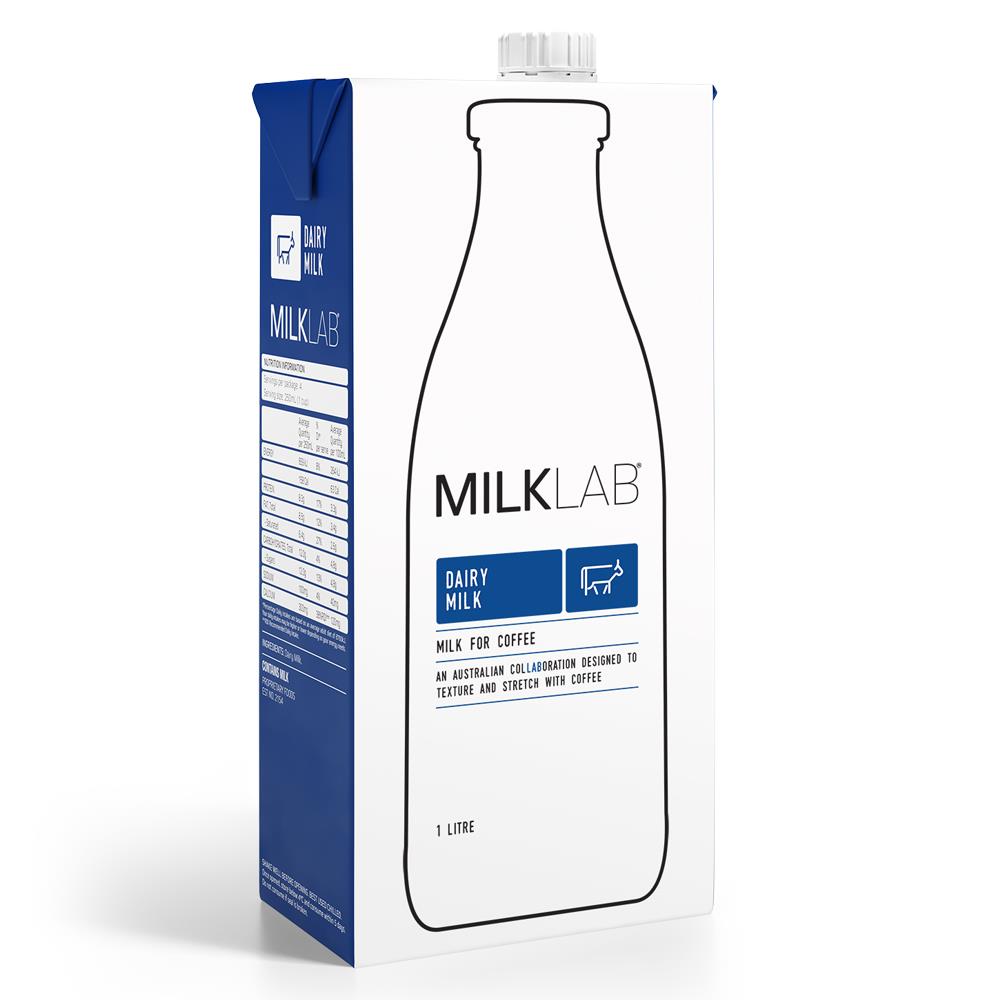
• MILKLAB Oat is made with 100% Australian oats and no added sugar, with a rich, oaty flavour and a natural subtle sweetness. It textures and stretches predictably, which matters when you have three jugs on the go.
• Oatly Barista Edition is deliberately not sweetened and not heavy. It is fully foamable and gives baristas control over foam density, which is why it turns up so often in latte art competitions. The formulation includes an acidity regulator and rapeseed vegetable oil to get there.
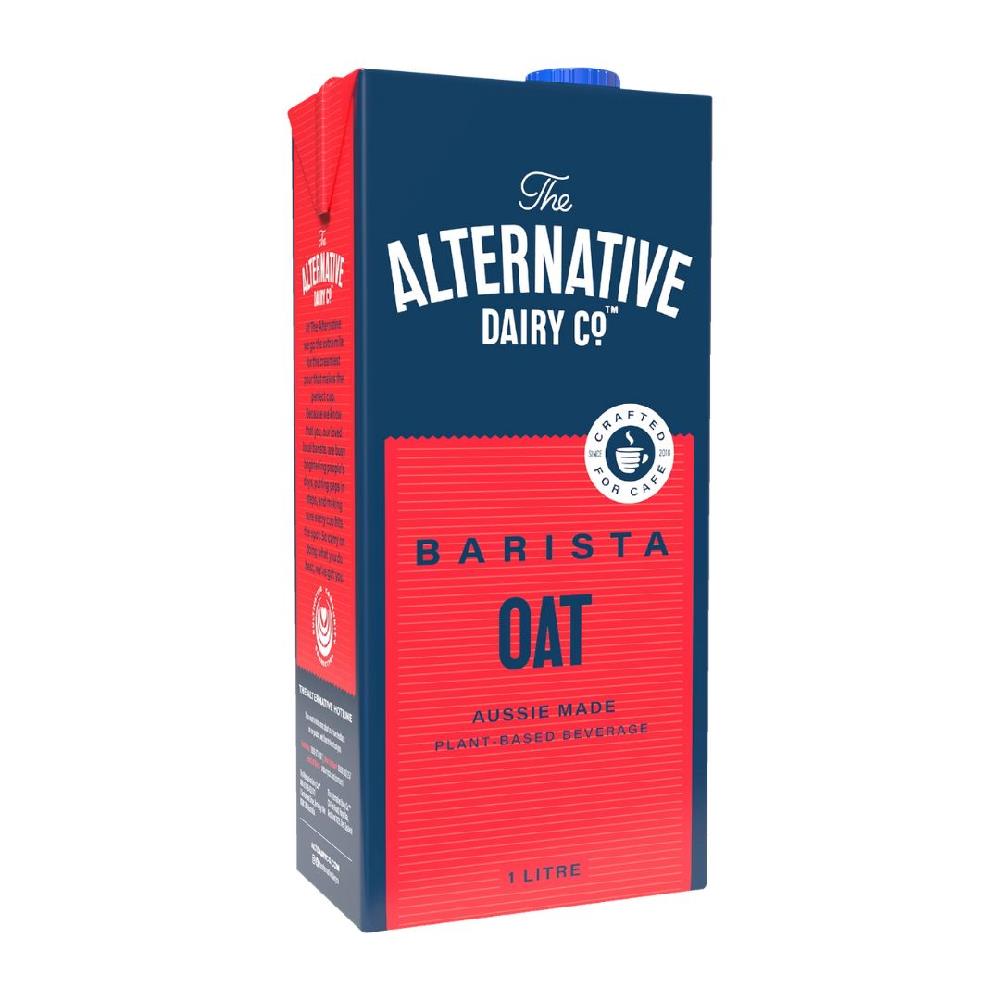
• Alternative Dairy Co Barista Oat is made with Australian oats from Blue Lake Milling in the Riverina, GMO-free, with at least 98% Australian ingredients. It sits at the creamier end of the category.
• Minor Figures Barista Oat comes from a specialty coffee background and is built to let the espresso lead, adding natural sweetness and silky microfoam without masking the roast. The ingredient list is short, and there is an organic version for venues that want one on the menu..
The searches around “alternative oat milk” and “oat milk barista” usually come from someone whose current oat has let them down, either splitting when it hits hot espresso or going flat within a minute in the cup. If that is happening, check you are on a barista formulation rather than the everyday version, then check your steam temperature before you change brands.
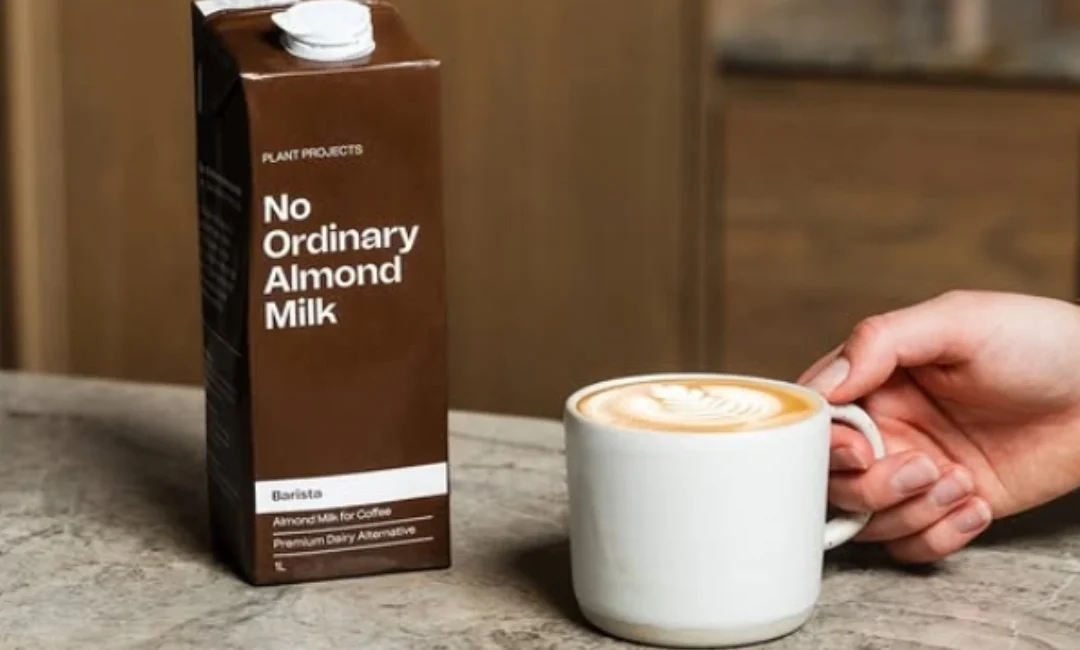
Barista almond milk: the flavour divider
Barista almond milk is the category people feel most strongly about, in both directions. It has the most distinct flavour of the four, nutty and clean, and it either complements your espresso beautifully or clashes with it. Darker, chocolatey roasts tend to fight almond. Lighter, fruitier roasts tend to sit well with it.
Technically it is the hardest of the four to make behave. Almond brings very little protein, so barista almond milks almost always contain gums, starches and emulsifiers along with added vegetable oil to build a stable foam. Done well, the result is a light, glossy microfoam. Done poorly, or steamed too hot, it separates and you get a watery layer under a stiff cap.
Practical notes for the bar:
• Steam it slightly cooler than you would dairy. Almond punishes overheating faster than oat or soy.
• Stretch early and keep the texturing phase short. It builds volume quickly.
• Do not leave it sitting in the jug. Almond foam is less forgiving of a wait than soy foam.
Almond earns its place in venues with a health-focused customer base, smoothie-heavy menus, and anywhere the crowd is already asking for it by name. It is rarely the right choice as a venue’s only plant milk, because the flavour is too polarising to default to.
Barista soy milk: the original, and still the best stretcher
Soy was in Australian cafes long before oat arrived, and it has not been displaced so much as joined. Barista soy milk has the highest natural protein of the four plant categories, which means it stretches further, holds a tighter foam for longer, and is the most forgiving milk here for anyone still learning to texture.
Bonsoy is the reference point for most Australian baristas. It uses whole certified organic soybeans with no artificial sweeteners, it does not shift flavour profile when heated, and it stretches further than most, which is exactly what you want for latte art. Alternative Dairy Co and Vitasoy also run soy formulations built for coffee, so there is genuine choice within the category rather than one default.
Flavour is where soy divides opinion. It is fuller and beanier than oat, with a slight savoury edge that some drinkers love and others notice immediately. Where oat disappears into the coffee, soy makes itself known.
Soy suits venues with an established older customer base who have been ordering soy lattes for fifteen years and are not switching, venues with a lot of nut allergy traffic, and any bar where consistent texture under pressure matters more than a neutral flavour.
Barista coconut and macadamia: the specialists
These two are not usually a venue’s primary plant milk, and they are not trying to be. They are menu differentiators.
MILKLAB Coconut was formulated specifically for coffee rather than adapted from a cooking product, and it textures and stretches across coffee styles. The flavour is unmistakably coconut, which makes it a natural fit for iced coffee, cold brew, and anything with caramel or chocolate in it. In a hot flat white it is a strong personality, and customers either order it deliberately or not at all.
MILKLAB Macadamia sits at the premium end and is the creamiest of the group, with a buttery, subtly sweet flavour. It is a signature-drink milk. Venues that carry it tend to build a menu item around it rather than offering it as a straight substitution.
Both make sense in cafes running seasonal or specialty menus, in warmer markets with heavy iced coffee volume, and in venues competing on menu range rather than speed. Neither belongs in a high-volume site that needs to keep its milk fridge simple.
Barista milk comparison at a glance
| Category | Froth and texture | Flavour with espresso | Other brands we stock | Best venue fit |
| Oat | Reliable, creamy, holds well. Most consistent of the four | Mild, slightly sweet, sits behind the coffee | MILKLAB Oat 1L (8), Oatly Barista 1L (6), Alternative Dairy Co Oat 1L (12), Bonsoy Oat 1L (6) | Almost any venue. The first plant milk to add |
| Almond | Light and glossy when handled right. Least forgiving | Distinct and nutty. Clashes with darker roasts | MILKLAB Almond, Alternative Dairy Co Almond | Health-focused and smoothie-heavy venues |
| Soy | Stretches furthest, tightest foam, most forgiving | Full and beany with a savoury edge | Bonsoy Soy 1L (6), Alternative Dairy Co Soy, Vitasoy | Established soy customer bases, nut-allergy traffic, latte art |
| Coconut | Textures and stretches well, lighter body | Strong coconut character | MILKLAB Coconut 1L (8) | Iced coffee volume, specialty menus |
| Macadamia | Creamiest of the group | Buttery, subtly sweet, premium | MILKLAB Macadamia 1L (8) | Signature drinks and specialty menus |
How many barista milks should your venue actually stock
More options is not automatically better. Every extra line is fridge space, another SKU to count, and another carton at risk of hitting its date before it empties.
A workable approach for most venues:
1. One barista dairy. Still the majority of orders in most Australian cafes. MILKLAB Dairy is made with 100% Australian milk from farmers including those in the Goulburn Valley, free from artificial colours, flavours, preservatives and added sugar.
2. One barista oat. The default plant option, and the one that will absorb most of your alternative milk demand.
3. One second plant milk chosen on your customers, not on trend data. Soy if you have a long-standing soy crowd or heavy nut-allergy traffic. Almond if people are asking for it by name.
4. A specialist only if it earns a menu item. Coconut or macadamia are worth carrying when they anchor a specific drink, not as a shelf-filler.
Then review it after a month against your actual usage. Venues consistently over-order the milk they find interesting and under-order the one that empties fastest.
Because we carry all of these categories across 150+ brands, a venue can run this exercise without splitting the order across three suppliers. One account, one delivery, and you can change your second plant milk next month without opening a new trade relationship.
Frequently Asked Questions
What is the difference between barista milk and regular milk?
Barista milk is formulated to foam more reliably, with finer texture and longer-lasting bubbles. In dairy, that usually means higher protein, around 4 to 5% against 3.3 to 3.5% in regular milk, often boosted with milk solids. In plant milks it means added vegetable oils, gums, starches and emulsifiers to mimic the way dairy fat and protein interact when heated.
Which barista milk froths the best?
Barista soy generally stretches furthest and holds the tightest foam, because soy has the highest natural protein of the plant options. Barista oat is close behind and more forgiving on flavour. Almond is the hardest to texture consistently because almond is naturally low in protein, so it depends more heavily on added gums and oils to build a stable foam.
Why does my plant milk split when it hits hot coffee?
Two usual causes. First, you may be using an everyday plant milk rather than a barista formulation, which lacks the added oils and stabilisers that hold it together against hot acidic espresso. Second, overheating. Above roughly 70 degrees the protein structures break down and separation becomes much more likely. Aim to finish steaming well before that point.
Which barista milk should a cafe stock first?
One barista dairy and one barista oat covers the majority of orders in most Australian venues. Oat has the mildest flavour, froths predictably and works across hot and iced drinks, so it absorbs most alternative milk demand on its own. Add a second plant milk based on what your regulars actually ask for rather than on category trends.
Are barista plant milks vegan and allergy friendly?
Most are vegan, but they differ on allergens. Soy is nut free, almond and macadamia are not, and oat suits venues avoiding both nuts and soy. Some are certified organic, gluten free, halal or kosher. Because formulations vary by brand, check the individual product panel rather than assuming the whole category is equivalent.
Getting the milk mix right for your venue
Barista milk decisions get treated as a taste question when they are really an operations question. Froth performance decides how your drinks look and hold. Flavour decides whether the coffee or the milk leads. Venue fit decides whether a carton empties or expires.
For most Australian cafes the answer is a barista dairy plus a barista oat, then one more plant milk chosen on what your regulars order, with coconut or macadamia added only when they anchor something on the menu.
Kelly’s Distributors is family-owned and supplies cafes and coffee shops across the country from Sunnybank Hills in Brisbane, with barista milk from MILKLAB, Oatly, Bonsoy, Alternative Dairy Co and Vitasoy alongside syrups, packaging and the rest of the cafe range. Delivery is Australia-wide.
Browse the full plant based milk range to compare cartons and pack sizes, or open a wholesale account to order all four categories on one trade account.